Category Archives: Gallery of Faith

Christian heroes and martyrs throughout the ages
Gained from various websites including
https://www.wholesomewords.org/biography/index.html

WILLIAM TYNDALE

William Tyndale: Bible Translator & Martyr
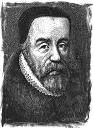
William TyndaleTYNDALE (tin’dal), WILLIAM: Biblical translator and martyr; b. most probably at North Nibley (15 miles s.s.w. of Gloucester), England, in 1484; d. at Vilvoorden (6 miles n.e. of Brussels), Belgium, Oct. 6, 1536. He was descended from an ancient Northumbrian family, went to school at Oxford, and afterward to Magdalen Hall and Cambridge, and about 1520 became tutor in the family of Sir John Walsh, at Little Sodbury in Gloucestershire.

He was in orders; but the record of his ordination has not yet been verified. Having become attached to the doctrines of the Reformation, and devoted himself to the study of the Scriptures, the open avowal of his sentiments in the house of Walsh, his disputes with Roman Catholic dignitaries there, and especially his preaching, excited much opposition, and led to his removal to London (about Oct., 1523), where he began to preach, and made many friends among the laity, but none among ecclesiastics. He was hospitably entertained at the house of Sir Humphrey Monmouth, and also pecuniarily aided by him and others in the accomplishment of his purpose to translate the Scriptures into the vernacular. Unable to do so in England, he set out for the continent (about May, 1524), and appears to have visited Hamburg and Wittenberg; but the place where he translated the New Testament, although conjectured to have been Wittenberg, can not be named with certainty. It is, however, certain that the printing of the New Testament in quarto was begun at Cologne in the summer of 1525, and completed at Worms, and that there was likewise printed an octavo edition, both before the end of that year. From an entry in Spalatin’s Diary, Aug. 11, 1526, it seems that he remained at Worms about a year; but the notices of his connection with Hermann von dem Busche and the University of Marburg are utterly unwarranted conjectures; and, it being now an established fact that Hans Luft never had a printing-press at Marburg, the colophon to Tyndale’s translation of Genesis, and the title pages of several pamphlets purporting to have been printed by Luft at Marburg, only deepen the seemingly impenetrable mystery which overhangs the life of Tyndale during the interval between his departure from Worms and his final settlement at Antwerp.

His literary activity during that interval was extraordinary. When he left England, his knowledge of Hebrew, if he had any, was of the most rudimentary nature; and yet he mastered that difficult tongue so as to produce from the original an admirable translation of the entire Pentateuch, the Books of Joshua, Judges, Ruth, First and Second Samuel, First and Second Kings, First Chronicles, contained in Matthew’s Bible of 1537, and of the Book of Jonah, so excellent, indeed, that to this day his work is not only the basis of those portions of the Authorized Version, but constitutes nine-tenths of that translation, and very largely that of the Revised Version. His Biblical translations appeared in the following order: New Testament, 1525-26; Pentateuch, 1530; Jonah, 1531. There is no general title of the Pentateuch; each book has its own title.

In addition to these he produced the following works. His first original composition, A Pathway into the Holy Scripture, is really a reprint, slightly altered, of his Prologue to the quarto edition of his New Testament, and had appeared in separate form before 1532; The Parable of the Wicked Mammon (1527); and The Obedience of a Christian Man (1527-28). These several works drew out in 1529 Sir Thomas More’s Dialogue, etc. In 1530 appeared Tyndale’s Practyse of Prelates, and in 1531 his Answer, etc., to the Dialogue, his Exposition of the First Epistle of St. John, and the famous Prologue to Jonah; in 1532, An Exposition upon the V. VI. VII. Chapters of Matthew; and in 1536, A Brief Declaration of the Sacraments, etc., which seems to be a posthumous publication. Joshua-Second Chronicles also was published after his death. All these works were written during those mysterious years, in places of concealment so secure and well chosen, that neither the ecclesiastical nor diplomatic emissaries of Wolsey and Henry VIII., charged to track, hunt down, and seize the fugitive, were able to reach them, and they are even yet unknown. Impressed with the idea that the progress of the Reformation in England rendered it safe for him to leave his concealment, he settled at Antwerp in 1534, and combined the work of an evangelist with that of a translator of the Bible. Mainly through the instrumentality of one Philips, the agent either of Henry or of English ecclesiastics, or possibly of both, he was arrested, imprisoned in the castle of Vilvoorden, tried, either for heresy or treason, or both, and convicted; was first strangled, and then burnt in the prison yard, Oct. 6, 1536. His last words were, “Lord, open the king of England’s eyes.” Excepting the narrative of Foxe, which is very unsatisfactory, and the opportune discovery of a letter written by Tyndale in prison, showing that he was shamefully neglected, and that he continued his literary labors to the last, no official records of his betrayal, arrest, trial, and martyrdom, have as yet been discovered. Indeed, less is known of Tyndale than of almost any of his contemporaries, and his history remains to be written. If the unknown and the mysterious excite and sustain interest, no theme can excel that attached to Tyndale. His life must have abounded in incident, variety, and adventure; and it culminated in tragedy. That his precious life might have been saved can not be doubted; and, although neither Cromwell nor Henry has been convicted of planning and conniving at his death, it is impossible to exonerate them from criminal indifference and culpable neglect.

Tyndale’s place in history has not yet been sufficiently recognized as a translator of the Scriptures, as an apostle of liberty, and as a chief promoter of the Reformation in England. In all these respects his influence has been singularly undervalued. The sweeping statement found in almost all histories, that Tyndale translated from the Vulgate and Luther, is most damaging to the reputation of the writers who make it; for, as a matter of fact, it is contrary to truth, since his translations are made directly from the originals.

Correspondence with Prof. Julius Caesar of Marburg (Hand-book, pp. 110 sqq.) proves that Hans Luft never had a printing-house in that town and that Tyndale had no connection with its university. The Prolegomena in Mombert’s William Tyndale’s Five Books of Moses show conclusively that Tyndale’s Pentateuch is a translation of the Hebrew original. The full titles of these works are given in the footnote. (J. I. Mombert, William Tyndale’s Five Books of Moses called the Pentateuch, being a literal Reprint of the Edition of 1530, compared with Tyndale’s Genesis of 1584, and the Pentateuch in the Vulgate, Luther, and Matthew’s Bible with various Collations and Prolegomena (New York, 1884; this book is out of print); idem. English Versions of the Bible, a Handbook with copious Examples illustrating the Ancestry and Relationship of the several Versions and Comparative Tables (London, 1907)).

As an apostle of liberty, he stands foremost among the writers of the period, whose heroic fortitude and invincible love of the truth were heard with a force superior to royal and ecclesiastical injunctions; and the very flames to which fanaticism and tyranny consigned his writings burnt them into the very hearts of the people, and made them powerful instruments in attaching and converting multitudes to the principles of the Reformation. It is not exaggeration to say that the noble sentiments of William Tyndale, uttered in pure, strong Saxon English, and steeped in the doctrines of the Gospel, gave shape to the views of the more conspicuous promoters of that grand movement, who, like himself, sealed their convictions with their blood.

A monument commemorating the life and work of Tyndale has been erected on the Thames Embankment, London. By J. I. MOMBERT.

BIBLIOGRAPHY: Besides the treatises on the history of the English Bible given in ii. 141 of this work, consult: R. Demaus, William Tyndale, 2d ed., London, 1886; John Fox, Acts and Monuments, ed. G. Townsend, vols. i.-v. passim, London, 1843-49 (consult Index); C. Wordsworth, Ecclesiastical Biography, i. 187 sqq., London, 1810; J. Strype, Ecclesiastical Memorials, i. 2. pp. 363-367, London, 1822; J. Stoughton, The Pen, the Palm, and the Pulpit, London, 1858; H. Morley, English Writers, pp. 226-229, London, 1864; W. H. D. Adams, Great English Churchmen, London, 1879; F. L. Clarke, The Life of W. Tyndale, London, 1883; C. E. Heisch, William Tyndale, London, 1884; G. B. Smith, W. Tyndale and his Translation of the English Bible, London, 1896; C. Tyler, The Story of William Tyndale, London, 1898; I. M. Price, The Ancestry of our English Bible, chap. xxi., Philadelphia, 1907; DNB, lvii. 424-430.

From The New Schaff-Herzog Encyclopedia of Religious Knowledge… New York: Funk and Wagnalls Company, 1912.
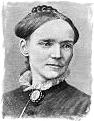
FRANCES RIDLEY HAVERGAL

Frances Ridley Havergal: 1836-1879

by F. W. Pitt

Frances HavergalInteresting particulars of Miss Havergal’s life are nearly as well-known as her lovely hymns. She was born at Worcester, [England], where her father was rector of Astley. She was a delicate child, but though not allowed to go to school, she became a scholar, poet and hymn writer. She may rightly be called the Hymnist of Keswick, as the Rev. Evan Hopkins was its theologian. Visitors to the great Convention know how Miss Havergal’s hymns, especially “Like a River Glorious,” may be heard while passing down a street as the well-known tune floats out on the evening air from the hearts and voices of people in the houses.
Her first well-known hymn was written in 1859, during a visit to Germany, when she was twenty-three years old. It was inspired by a picture of the Crucifixion under which were the words: “I gave My life for thee.” The hymn nearly went into the fire, for Frances was dissatisfied with her work; but instead of burning it, on second thought she put it, crumpled and singed, into her pocket. Later on she read the verses to a dear old Christian in an almshouse, who was so delighted with them that the young authoress made copies and sent them to friends.

Miss Havergal’s best known hymn was written in 1874, while staying in London with a large family who did not quite share her devotion to the Lord. She prayed for them all, and had the joy of receiving them one after another in her room, where she was able to help them.

Unable to sleep on the last night of her visit, she sat up and wrote, “Take My Life and Let It Be Consecrated, Lord, to Thee.”

The hymn, though not great poetry, expresses perfect surrender of the whole being to God. “Take myself, and I will be Ever, only, all for Thee.”

Her greatest hymn, in my opinion, is “Thou Art Coming, O My Saviour, Thou Art Coming, O My King,” which I include with “Like a River Glorious” and “Take My Life” as quite the best that have been, and perhaps could be, written on the subjects of each.

This gifted and greatly loved songstress died at the Mumbles, Swansea Bay, in 1879, at the early age of 43 years.

Like a River Glorious
Like a river glorious
  Is God’s perfect peace,
Over all victorious
  In its bright increase.
Perfect, yet it floweth
  Fuller every day,
Perfect, yet it groweth
  Deeper all the way.
Stayed upon Jehovah,
  Hearts are fully blest,
Finding as He promised,
  Perfect peace and rest.

Hidden in the hollow
  Of His pierced hand,
Never foe can follow,
  Never traitor stand.
Not a surge of worry,
  Not a shade of care,
Not a blast of hurry
  Moves the spirit there.

Every joy or trial
  Falleth from above,
Traced upon our dial
  By the Sun of Love.
We may trust Him fully
  All for us to do,
They who trust Him wholly
  Find Him wholly true.

Chorus:
Stayed upon Jehovah,
Hearts are fully blest—
Finding, as He promised,
Perfect peace and rest.

Thou Art Coming, O My Saviour
Thou art coming, O my Saviour,
  Thou art coming, O my King,
In Thy beauty all resplendent;
In Thy glory all transcendent;
  Well may we rejoice and sing.
Coming in the opening East,
  Herald brightness slowly swells;
Coming, O my glorious Priest,
Hear we not Thy golden bells?

Thou art coming, Thou art coming:
  We shall meet Thee on the way,
We shall see Thee, we shall know Thee,
We shall bless Thee, we shall show Thee
  All our hearts could never say.
What an anthem that will be,
  Ringing out our love to Thee,
Pouring out our rapture sweet
  At Thine own all-glorious feet.

Thou art coming, we are waiting
  With a hope that cannot fail,
Asking not the day nor hour …
Resting on Thy word of power,
  Anchor’d safe within the veil.
Time appointed may be long,
  But the vision must be sure;
Certainty shall make us strong,
  Joyful patience shall endure.

O the Joy to see Thee reigning,
  Thee, my own beloved Lord!
Every tongue Thy Name confessing,
Worship, honour, glory, blessing,
  Brought to Thee with one accord.
Thee, my Master and my Friend,
  Vindicated and enthroned
Unto earth’s remotest end,
  Glorified, adored and owned.

Consecration
Take my life and let it be
Consecrated, Lord, to Thee.
Take my moments and my days,
Let them flow in ceaseless praise.

Take my hands and let them move
At the impulse of Thy love.
Take my feet and let them be
Swift and beautiful for Thee.

Take my voice and let me sing
Always, only, for my King.
Take my lips and let them be
Filled with messages for Thee.

Take my silver and my gold,
Not a mite would I withhold.
Take my intellect and use
Every power as Thou shalt choose.

Take my will and make it Thine,
It shall be no longer mine.
Take my heart—it is Thine own,
It shall be Thy royal throne.

Take my love: my Lord, I pour
At Thy feet its treasure-store.
Take myself, and I will be
Ever, only, all for Thee.

From The Romance of Women Hymn Writers by F.W. Pitt. Findlay, Ohio: Fundamental Truth Publishers, [n.d.]

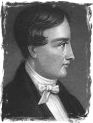
ROBERT MURRAY MCCHEYNE

Robert Murray McCheyne

by David J. Beattie

I once was a stranger to grace and to God,
I knew not my danger and felt not my load:
Though friends spoke in rapture of Christ on the tree,
JEHOVAH TSIDKENU was nothing to me.

My terrors all vanished before the sweet name;
My guilty fears banished, with boldness I came
To drink at the fountain, life-giving and free:
JEHOVAH TSIDKENU is all things to me.

Robert McCheyneAfter the passing of well nigh a century, “Jehovah Tsidkenu” (The Lord my Righteousness) has lost none of its old-time charm. To-day, as then, its sweet yet rugged simplicity marks it down as a hymn beloved. Claiming no high literary merit, but aiming only to voice the deep, unfathomable joys of a soul redeemed by the precious blood of Christ, this old-fashioned testimony hymn has sung its way into the hearts of ransomed ones, from the first days of the Victorian era until the present time.
Robert Murray McCheyne was but a youth of twenty-one when, one bleak November day in 1834, just as he was recovering from an attack of fever, which had laid him aside on a sick-bed, he wrote the hymn, inseparably associated with a name revered not only in the land of his birth, but wherever these spiritual heart-breathings of a first love have found an honoured place.

He was born in Edinburgh on May 21st, 1813, and was the youngest child of the family. At school he made rapid progress, and at an early period became somewhat eminent among his fellows. At that time there were held in the Tron Church, in the interval between sermons, what our good Scottish forefathers reverently regarded as catechetical exercise. Accompanied by his parents, Robert was regular in his attendance on such occasions, and it was then that interest was aroused in the boy’s sweet recitation of the Psalms and passages of Scripture.

After a period of six years, spent at the High School, where he gained some distinction in literature, he entered the Edinburgh University. Referring to McCheyne at this particular time, Dr. Andrew Bonar, his devoted friend and companion writes: “He had a very considerable knowledge of music, and himself sang correctly and beautifully. This was a gift which was used to the glory of the Lord in after days—wonderfully enlivening his secret devotions, and enabling him to lead the song of praise in the congregation wherever occasion required.”

The death of his eldest brother, David, a faithful and promising young Christian, to whom he was greatly attached, was an event which awoke him to realise his condition as a lost sinner. Thus in His wonderful providence, the Lord called one soul to enjoy the boundless riches of His grace, while He took the other into the possession of eternal glory.

It was a few months before leaving college, that Mr. McCheyne wrote “Jehovah Tsidkenu,” which reveals the sure and steadfast confidence of his soul. Some days later, on his recovery from the illness which had laid him aside, he wrote in his diary a short poem, commencing:

He tenderly binds up the broken in heart,
  The soul bowed down He will raise:
For mourning, the ointment of joy will impart:
  For heaviness garments of praise.

Ah, come, then, and sing to the praise of our God,
  Who giveth and taketh away;
Who first by His kindness and then by His rod,
  Would teach us, poor sinners, to pray.

Though still undergoing a student’s usual examination before the Presbytery, we find him, at twenty-two, preaching in Annan Church, Dumfriesshire; thus began Robert Murray McCheyne’s labours in the Lord’s vineyard.

From the early days of his ministry Mr. McCheyne depreciated the custom of reading sermons, believing that to do so greatly weakened the power and freedom of the preacher in delivering his message. Though he possessed the gift of extemporaneous composition, this distinctive endowment did not in the least degree restrain him from making diligent preparation at all times. “The heads of his sermon,” said one who was accustomed to hear him preach, “were not the milestones that tell you how near you are to your journey’s end, but they were nails which fixed and fastened all he said.”

In the year 1836, when he was twenty-three, Mr. McCheyne became minister of Dundee, where during the remaining years of a brief but beautiful life, he laboured with untiring zeal and fervour, the fragrant memory of which is undiminished, even to this day. One of his first efforts was to begin a weekly prayer meeting, and never had he any cause to regret having set apart one night in the week for this purpose, for some of the most precious seasons were at these meetings. Nor did the young minister confine his energies to the older members of his flock, but sought to encourage the various Sunday Schools in his parish. It was in connection with his work among the young, that, in 1841, he wrote the hymn “Oil for the Lamp,” in order to impress the parable on a Sunday School class. It is an almost forgotten hymn of sixteen verses, telling in simple language the story of the Ten Virgins, and opens with the stanza:

Ten virgins clothed in white,
  The Bridegroom went to meet;
Their lamps were burning bright
  To guide His welcome feet.

Towards the end of his second year’s ministry at Dundee, Mr. McCheyne’s health broke down—the result of unremitting labour—and his medical adviser insisted on a complete change. This led him to accept an invitation to accompany a party about to set out on a mission to Israel. Murray McCheyne’s visit to Palestine, his unbounded joy at being used in carrying salvation to the Jew as he had hitherto done to the Gentile, forms one long interesting record of that memorable mission, and is contained in a diary of these events, which he has left behind.

After an absence of some months, Mr. McCheyne returned to his beloved flock at Dundee, where he was received with the greatest joy. The years following were times of blessing and revival, which spread to many parts of Scotland.

Though Mr. McCheyne wrote a few hymns, one or two of which still survive, his name is best remembered as a faithful and beloved minister of the Gospel, rather than as a hymn writer.

After a comparatively brief ministry of seven years, Robert Murray McCheyne passed into the presence of the Lord, on March 25th, 1843, at the early age of twenty-nine.

Possibly his best loved hymn is the one originally entitled “I am a Debtor.” It was written in 1837, and contains nine verses. Few hymn books give more than four verses, these having been selected as the most suitable for public worship. The opening stanza strikes the key note to the theme so tenderly expressed and sustained throughout the hymn:

When this passing world is done,
When has sunk yon glaring sun,
When I stand with Christ on high,
Looking o’er life’s history:
Then, Lord, shall I fully know—
Not till then—how much I owe.

From Stories and Sketches of Our Hymns and Their Writers by David J. Beattie. Kilmarnock, Scotland: John Ritchie, [1934].

JONATHAN GOFORTH

Jonathan Goforth, Radiant Soul-Winner of North China
by Thomas John Bach
Jonathan GoforthJohn Goforth of Yorkshire, England, immigrated to Canada in 1840 and settled near Thorndale in western Ontario. Jonathan, his seventh child, was born February 10, 1859. The parents, as pioneer farmers, were exposed to many physical hardships and had to practice the utmost economy.

The mother was faithful in teaching the Scriptures to her children, and when Jonathan was seven years of age he received a Bible from a neighbor lady. At ten, he came under deep conviction of sin and the need of salvation; but no one asked him to make a decision for Christ.

Opportunely, there came to the community a Presbyterian pastor by the name of Lachlan Cameron, who was faithful in preaching the Word of God. Jonathan Goforth dated his conversion from a service which he attended when he was eighteen years of age. Cameron was preaching, and he responded to the appeal for decisions. He joined the Presbyterian Church.

Through much hardship and noble effort, he obtained his grammar and high school education. During the years of his youth he often debated within himself whether he should be a teacher or a politician. His pastor, the Rev. Mr. Cameron, invited Jonathan to his home for instruction in the Scriptures and in Latin and Greek, and thus helped him prepare to enter Knox College, Toronto.

One day, while he was in college, he heard Missionary George Leslie Mackay of Formosa present the claims of Christ for that mission field in a most forceful way. Jonathan described that meeting in a few words: “I heard the voice of the Lord saying: ‘Who will go for us and whom shall we send?’ and I answered: ‘Here am I, send me.’ From that hour I became a foreign missionary.” He lost no opportunity to prepare himself for the mission field and to declare the claims of Christ and the needs of the unevangelized multitudes.

APPOINTMENT TO CHINA

In the year 1885, Goforth received a copy of Hudson Taylor’s book, China’s Spiritual Need and Claims. He was deeply impressed and from that time on, with renewed dedication, he began to pray that a door would be opened for him to go to China. At the General Assembly of the Presbyterian Church of Canada in June, 1887, a new missionary vision came to that body of Christians with the result that Jonathan Goforth was appointed their pioneer missionary to North China.

On October 25 of the same year Goforth was ordained, and the same month he was married to Florence Rosalind Bell-Smith. On February 4, 1888, they sailed for China. By the middle of September of the same year they were looking over their new mission field in the Province of Honan.

It was soon evident that Goforth was “a man sent from God.” He was untiring in his evangelistic services and efficient in the training of national workers and the establishing of churches under the leadership of Chinese Christians. It was there that the grace of God was revealed in a special way, as the Lord sustained and comforted Jonathan Goforth and his family in their manifold trials, sufferings, and sorrows.

Goforth had a passion for winning souls for Christ. He was outstanding as a conservative theologian. He required that at his public prayer meetings the one who took part should be definite in petition, and that the prayer should be accompanied by thanksgiving and confession.

He visited eight of the principal mission centers in Korea in 1907, the year the great revival was passing over that country, and wrote the booklet, When the Fire Swept Korea. His book, By My Spirit, has enjoyed world-wide circulation.

Dr. Charles G. Trumbull, late editor of the Sunday School Times, wrote: “Dr. Goforth was one of the most radiant, dynamic personalities that ever enriched my life. God’s missionary program of the past half century would not have been complete without him.”

The last few years of his life Jonathan Goforth was totally blind. Nevertheless, the fragrance of thanksgiving and holiness accompanied the distinguished missionary until he died in Canada, October 7, 1936. His life’s motto was: “By my spirit, saith the LORD of hosts.”

divider
Having read aloud to his wife from Finney’s booklet, Lectures on Revival, Mr. Goforth said to her: “It simply means this: The spiritual laws governing a spiritual harvest are as real and tangible as the laws governing the natural harvest.” Then he added solemnly, as though he were making a vow: “If Finney is right, and I believe he is, I am going to find out what these spiritual laws are and obey them, no matter what the cost may be.” Goforth did obey these “laws of revival,” as he said he would, and God made him a channel of blessing to many Christians in China as well as a mighty winner of souls.

divider
Goforth was convinced that it was the simple gospel message that was “the power of God unto salvation,” and he was eager to share this conviction with others. He said, “Oh, that God would give me an opportunity before I pass on to demonstrate to missionaries and to the home church what results would follow if we but GAVE GOD A CHANCE by broadcasting this wonderful message of salvation by every possible means in our power. I am convinced the simple Gospel story has never had a chance in China.”

divider
Goforth was known among the other missionaries as well as the Chinese workers for his detailed knowledge of the Scriptures. Concerning the importance of memorizing the Bible, he wrote: “It is well to be able to repeat Scripture, but it is of very great importance to remember where it is in the Bible. My ideal has always been (though I cannot say I have always attained unto it), that it would be a shame for me, a missionary, to have to go to a concordance to find a portion of Scripture that a Chinese brother might ask me for. My wife seems to regard me as her walking concordance and my Chinese fellow-workers seem to think that I know everything in the Bible, but I am ever wishing I could spend several hundred years at the Bible.

“Since the New Version of the New Testament came out in Chinese, I will in a few days have gone over it thirty-five times in the Chinese text, comparing it with the Authorized and Revised New Testament. My method now is to go over each verse five times, but ever trying after the first time to repeat it from memory… As a result of this method, when I preach to the Chinese, the Scripture comes readily to mind and the Holy Spirit is able through me to compare spiritual things with spiritual. It is appalling how God and souls are defrauded because we know so little of His saving Word.”

From Pioneer Missionaries for Christ and His Church by Thomas John Bach. Wheaton, Ill.: Van Kampen Press, ©1955.

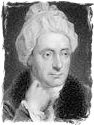
WILLIAM COWPER

William Cowper

by Christopher Knapp

William CowperThis distinguished poet and hymn writer was born at Great Berkhampstead,  in Hertfordshire, England, November 26, 1731. He came of an excellent family, his father being a clergyman, and his grand-uncle, Lord Chancellor of the Realm. He lost his mother when only six years old; and at the early age of ten was sent to a boarding-school, where the older boys were rough and cruel towards him; being of a very sensitive and timid disposition, he suffered much from the hands of these thoughtless bullies. He says, speaking of this time, “Day and night I was upon the rack; lying down in horror and rising up in despair.” And when he became a man he wrote a poem called Tirocinium (Review of Schools), in which he described what children like himself often have to endure in these private boarding-schools; and the cruelties practiced on him by the older boys probably helped later to unbalance his mind at times, for “when grown to manhood, he tried to hang himself,” the account says; but the rope broke, and he was saved. After that, in his insanity, he supposed that he had committed the unpardonable sin.

How sad that thoughtless school-mates, by their cruel sport, should have helped to unbalance the mind of this timid and sensitive boy. Let it be a lesson to all boys to be kind and gentle to those younger than themselves, especially to the motherless and timid.

Handicapped by his great diffidence, no doubt, Cowper had no success in the law profession which he negligently pursued for nine years: “He neither sought business, nor business sought him.” Then an influential friend obtained for him a clerkship in the House of Lords, but learning that he must appear before them for examination, he became so despondent that he attempted suicide.

For a long time dear Wm. Cowper thought it was impossible for him to be saved. But in July, 1764, sitting in his garden one day with the blessed Book of God before him, he was arrested by the words in Romans 3:24, 25; “Being justified freely by his grace through the redemption that is in Christ Jesus; whom God hath set forth to be a propitiation through faith in his blood, to declare his righteousness for the remission of sins that are past through the forbearance of God.” The light of the gospel, contained in these wonderful words, entered into his soul, and he there and then “believed to the saving of his soul.”   We shall let him tell us in his own words what he felt and experienced at that happy moment.

“Immediately I received strength to believe,” he says, “and the full beams of the Sun of Righteousness shone upon me. I saw the sufficiency of the atonement that Christ had made, my pardon in His blood, the fulness and completeness of my justification. In a moment I believed and received the gospel.”

Yes! It is the moment we believe the “gospel of our salvation” that we pass from death unto life. It does not take years, or months, or days to be saved; one look of faith in Christ, and you are made a child of God. (Read it for yourself in John 1:12). Reader, if you are anxious to be saved, you may receive Christ by faith just now; He has suffered for your sins on the cross to put them away for ever. This will bring both peace and joy to your soul, as it did to William Cowper.

When 34 years of age, being largely restored in mind, his friends, Mr. and Mrs. Unwin, took him in their home, near Olney, where lived the devoted John Newton, who was of much help to Cowper. They became close friends, and oftentimes “took sweet counsel together” over the preciousness of Christ and the fulness of His salvation. Together, they composed or compiled the celebrated Olney Hymns. Besides his sixty-four Olney Hymns, Cowper wrote many other pieces by which he ranks among the first of English poets. He boldly pleaded the cause of the poor and the slave with his pen; even the dumb animals came in for a share of his poetic pleas. He was also greatly interested in Christian missions, as every follower of our Lord should be.

Among his best-known hymns are the following:

“Oh, for a closer walk with God.”
“Ere God had built the mountains.”
“There is a fountain filled with blood.”
“Hark, my soul! it is the Lord.”
“I thirst, but not as once I did.”
“Of all the gifts Thy love bestows.”
“God moves in a mysterious way.”

The last mentioned was the last but one of his many and beautiful compositions.

A large part of Cowper’s life was spent in the gloom of melancholy in which he experienced at times impulses to suicide. There is a story that it was after he had providentially been prevented from drowning himself in the river Ouse, that he wrote the sublime hymn on Divine Providence,

“God moves in a mysterious way
  His wonders to perform;
He plants His footsteps in the sea,
  And rides upon the storm.”

But the hymn from Cowper that has made more history than any other is,

“There is a fountain filled with blood,
  Drawn from Immanuel’s veins;
And sinners, plunged beneath that flood
  Lose all their guilty stains.

The dying thief rejoiced to see
  That fountain in his day;
And there have I, as vile as he,
  Washed all my sins away.

Dear dying Lamb, Thy precious blood
  Shall never lose its power,
Till all the ransomed church of God
  Be saved to sin no more.

E’er since, by faith, I saw the stream
  Thy flowing wounds supply,
Redeeming love has been my theme,
  And shall be till I die.

Then, in a nobler, sweeter song,
  I’ll sing Thy power to save,
When this poor lisping, stamm’ring tongue
  Lies silent in the grave.”

Critics have found much fault with the first stanza’s simile. The hymn, however, is hallowed by many precious and notable occurrences in connection with it. An author gives the following incident among others:

“A Mr. Cross had a notorious infidel neighbor. He took great interest in this man’s spiritual welfare, and several times endeavored to reach his bedside; but his wife, obeying her husband’s command, refused to allow any one to converse with him on the subject of religion. But the good man was not discouraged, and he soon solved the difficulty.

“In the neighborhood was a little girl whose voice in song was sweet and impressive. Mr. Cross said to her, ‘Mabel, would you mind singing the hymn, ‘There is a fountain filled with blood,’ in the room of yonder window where a poor man is very sick?’ Mabel was glad to do so kind a service, and Mr. Cross then gave her a handful of beautiful flowers, and in a few minutes she was admitted into the room; and laying the flowers on a table near the bed, she began the hymn. Line after line was sung tenderly and touchingly. Presently the sick man was overcome with emotion, and in a trembling voice asked: ‘Where, my child, did you get that song?’ When he learned that Mabel was a member of Mr. Cross’s Bible Class, he made the request that the teacher should call to see him. The sequel can be told in a single line—’A brand was plucked from the burning.'”

Dear Cowper passed away “to be with Christ,” April 25, 1800, in his 69th year, and his memory, as that “of the just,” is “blessed for ever!”

Prayer for Children
by William Cowper

Gracious Lord, our children see.
By Thy mercy we are free,
But shall these, alas, remain
Subjects still of Satan’s reign?
Israel’s young ones, when of old
Pharaoh threatened to withhold,
Then Thy messenger said, “No:
Let the children also go.”

When the angel of the Lord,
Drawing forth his dreadful sword,
Slew with an avenging hand
All the first-born of the land,
Then Thy people’s doors he passed,
Where the bloody sign was placed.
Hear us, now, upon our knees,
Plead the blood of Christ for these!

Lord, we tremble, for we know
How the fierce malicious foe,
Wheeling round his watchful flight,
Keeps them ever in his sight.
Spread Thy pinions, King of kings;
Hide them safe beneath Thy wings;
Lest the rav’nous bird of prey
Swoop and bear these young away.

A Closer Walk with God
by William Cowper

O for a closer walk with God,
A calm and heavenly frame;
A light to shine upon the road
That leads me to the Lamb.

The dearest idol I have known,
Whate’er that idol be,
Help me to tear it from Thy throne,
And worship only Thee.

So shall my walk be close with God,
Calm and serene my frame;
So purer light shall mark the road
That leads me to the Lamb.

From Who Wrote Our Hymns by Christopher Knapp. New York: Loizeaux Brothers, [1925?].