Category Archives: Gallery of Faith 2

Christian heroes and martyrs throughout the ages
Gained from various websites including
https://www.wholesomewords.org/biography/index.html

The Marian Martyrs – Hugh Latimer and Nicholas Ridley

Two of the outstanding leaders of the English Reformation, High Latimer and Nicholas Ridley, were burned at the stake in Oxford on 16 October 1555. The site of their martyrdom in Broad Street is marked by a simple cross in the pavement.

A more elaborate memorial stands round the corner in St Giles. Their martyrdom at the instigation of the reactionary Roman Catholic Queen Mary I was made memorable by Latimer’s powerful challenge at the stake: ‘Be of good comfort, Master Ridley, and play the man. We shall this day light such a candle, by God’s grace in England, as I trust shall never be put out’.

These words, long remembered and repeated in Christian homes, helped to keep alive the memory of what it cost to recover the gospel in England.

The gifts of the two men were very different, although they were united in the common faith. Hugh Latimer, the speaker, was the older of the two, about seventy at the time of his martyrdom. He had been Bishop of Worcester but had subsequently exchanged episcopal office for the ministry of a travelling preacher.

Nicholas Ridley was fifty-five years of age, a distinguished scholar and until recently Bishop of London. Both men played a significant role in the English Reformation.

Latimer

Hugh Latimer (c.1485–1555) was born in Leicestershire, the son of a tenant farmer. He never forgot his farming background, which supplied him with apt illustrations in his preaching later.

Throughout his life he remained very much a man of the people, well able to communicate with his hearers in city or hamlet. Despite his bluff manner, he was no simpleton. A bright pupil, his father was prepared to make sacrifices to send him to Cambridge. There at Clare College he made good progress in his studies.

His childhood and adolescence were spent in pre-Reformation England and he accepted the teaching of the church. He was, in his own words, an ‘obstinate papist’ with a love of the elaborate ceremony of the times.

Sudden conversion

For a man with his background the priesthood seemed the obvious calling. While he was still a student, news of the teachings of Luther reached Cambridge and became a matter of hot debate. Latimer strongly opposed the Reformation and attacked the teachings of Philip Melanchthon, Luther’s colleague, in his BD thesis.

His conversion was sudden and dramatic. Another university man, Thomas Bilney, asked him to hear his confession. This turned out to be a confession of complete faith in Christ as Saviour.

Latimer was profoundly shaken and his own conversion followed. Never a man for half measures, his preaching changed and he was soon in trouble with the Bishop of Ely. Fortunately, he had friends at court and the bishop was overruled.

By the mid 1520s Henry VIII was restless and although opposed to the teaching of Martin Luther soon had his own quarrel with the pope.

Bishop of Worcester

Latimer’s fame as a preacher spread and he received opportunities to preach at court, although he was never happy in that environment. With relief he accepted appointment as rector of the remote and beautiful village of West Kington in Wiltshire.

But Wiltshire was not too remote for criticism of his preaching to reach the ears of William Warham, Archbishop of Canterbury. But before action could be taken, Warham was dead and had been replaced by the sympathetic Thomas Cranmer.

By 1535 Thomas Cromwell, Henry VIII’s secretary, was looking for vigorous preachers to promote the religious changes that followed the King’s break with the papacy. Latimer was appointed Bishop of Worcester but held the post for only four years. He resigned in 1539 when the King, in one of his swings of policy, demanded adherence to Roman theology. For several years he lived in obscurity and was imprisoned during the last year of Henry VIII’s reign.

Released under the Protestant Edward VI, he did not return to his bishopric but accepted a roving commission as a preacher, mainly in the Midlands with occasional visits to London.

Sermon on the plough

His sermons, though not models of expository preaching, powerfully promoted Reformation doctrine. The most famous — ‘The sermon on the plough’ — was preached in these years.

‘I liken preaching to a ploughman’s work’, he said. The preacher ‘hath a busy work to bring his parishioners to a right faith, as Paul calls it, and not a swerving faith; a justifying faith that maketh a man righteous, without respect of works’.

After developing the metaphor of the preacher-ploughman, he declared, ‘the preaching of the Word of God unto the people is called meat; Scripture calleth it

meat, not strawberries that come but once a year … but are soon gone: but it is meat, it is no dainties’.

It was in this sermon that Latimer described Satan as the most diligent bishop in all England — ‘never out of his diocese … call for him when you will, he is ever at home, the diligentest preacher in all the realm’.

Imprisoned

Latimer was in the Midlands when Edward VI was succeeded by his Roman Catholic half-sister Mary. Too powerful a preacher to be left at liberty, there is some evidence that the Council would have let him escape to spare them the embarrassment of dealing with him.

But he continued to preach for almost two months after Mary’s accession. To the messenger sent to arrest him he said, ‘I doubt not that God, as he hath made me worthy to preach his Word before two excellent princes, so will he able me to witness to the third, either to her comfort or discomfort eternally’.

After an examination before the Council he was taken to the Tower. It was there that he came into close contact with Nicholas Ridley, also by this time a prisoner.

Ridley

Nicholas Ridley (c.1500-1555) was born in Northumberland. Like Latimer he was at Cambridge when the teaching of the Continental Reformers was under debate. He proved an able student and spent some time in the University of Paris before returning to Cambridge.

At Cambridge he associated with Thomas Cranmer, who became Archbishop of Canterbury in 1533. For a time he was the archbishop’s chaplain but was then appointed vicar of Herne in North Kent.

He read widely, especially on the doctrine of the Lord’s Supper which was at the heart of the Reformation controversy. By 1545 he had serious doubts about any physical change in the consecrated elements.

This was dangerous teaching in the reign of Henry VIII, but in early 1547 the old king died and almost immediately Ridley was appointed Bishop of Rochester.

Worship in English

As a bishop he took a leading part in the changes in worship and church furnishings that took place in the English Reformation. Already at Herne he had been reported for allowing part of the service to be in English. Under Edward he was to promote worship entirely in the English language.

He also insisted on the removal of idolatrous images from the parish churches in his diocese. In 1550 he was transferred to the responsible bishopric of London, where he had stone altars (which encouraged the idea that the mass was a sacrifice) replaced by wooden communion tables.

But Ridley fell foul of the king’s half sister, Mary. He offered to preach for her, but she angrily refused his offer and made it clear that she had never read any Reformed literature and never would.

Unwisely, he took a prominent part in the attempt to replace Mary by Lady Jane Grey when Edward died. He made it clear in his preaching that the accession of Mary would mean losing the gains made by the English Reformation.

Truth cannot be bartered

When the attempt to place Lady Jane Grey on the throne failed, Ridley was quickly arrested. He was charged with high treason, found guilty and condemned to death. Strangely, he was then pardoned, but the Queen had determined that as soon as the law could be changed he would be accused of heresy and suffer the penalty.

This was the course followed with both Ridley and Latimer. After ridiculous ceremonies and tedious debates loaded against the Protestants, both men were condemned to death by burning.

The sentence was carried out on 16 October 1555. Latimer died quite quickly, but Ridley’s sufferings were prolonged. They died because they believed and taught that sinners are justified by faith in Christ alone without consideration of works or sacraments.

They demanded that this gospel of grace should be freely preached to the people in language that they could understand. They took seriously the biblical warnings against idolatry. For that reason they could not worship saints, bow to images or offer adoration to a piece of consecrated bread.

They knew that God is Spirit and that those who worship him must worship him in spirit and in truth. Truth cannot be bartered and so, like so many of their generation, they were prepared to suffer martyrdom.

Their deaths helped to write the truth of the living God on the national consciousness.
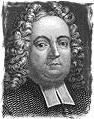
Matthew Henry

Matthew Henry, 1662-1714: Preacher and Scholar

©1996 Heath Christian Bookshop Charitable Trust. Used with permission.

Matthew HenryFor many Christians the name Matthew Henry is immediately associated with his “Commentary” on the Bible which has deservedly gained a reputation as the best and most widely used work of its kind. It is in every sense a massive exposition of scripture and has been of enormous benefit to Christians from Henry’s contemporaries such as Watts and Doddridge down to our present time nearly three centuries later. It was the product of many years of scholarship and industry by Henry who lived through a period of great turmoil in the religious life of the Country [England].
Marks of Grace.

Matthew was born in 1662 at a farm named Broadoak about three miles from Whitchurch in Shropshire and was the second son of Philip and Katherine Henry. His father had been an ordained clergyman in the parish of Worthenbury but because his conscience would not allow him to use the new forms of liturgy introduced by the Act of Uniformity in 1662, he had been ejected from his church.

Matthew was brought up with all the advantages of a Christian home and family, and he showed such an aptitude for learning that he was able to read the Bible by the age of three. Each day his parents gathered the children for morning and evening devotions, and after prayers and scripture readings, it was customary for his father to give a brief exposition of a passage from the Bible on which the children were encouraged to write their own accounts. The value of this practice was shown when Matthew later recognised that it was hearing his father speaking on the text, “The sacrifices of God are a broken spirit; a broken and contrite heart, O God, thou wilt not despise,” (Psalm 51:17) which melted his heart and caused him “to enquire after Christ.”

Matthew’s fondness for learning thrived rapidly under this routine and he spent several hours each day in private study even though his health was not very robust. After surviving a serious attack of fever at the age of ten, his thoughts were drawn to his own spiritual condition and on 7 December 1673 he was deeply moved by a sermon on the subject of judgment. He wrote, “I was under great fear of hell, till the Lord comforted me. I, having engaged in serious examination — what hopes I have that when I die and leave this earthly tabernacle I shall be received into heaven — I have found several marks that I am a Child of God.”

Vanity of the World.

Because of the exclusion of nonconformists from Oxford and Cambridge and the low moral tone of university life during the Restoration period, Matthew’s father secured a place for him in 1680 in a “dissenting academy” at Islington in London, but his stay there was short-lived because the master Thomas Doolittle was compelled by laws to live elsewhere and the scholars were dispersed.

As a result, Matthew continued his studies at home for several more years and then in 1685 he went to London again, this time to study law at Grays Inn. However, he found no satisfaction in this pursuit and soon he wrote a letter to his father stating, “The more I see of the world and the various affairs of the children of men in it, the more I see of the vanity of it, and the more I would fain have my heart taken off from it, and fixed upon the invisible realities of the other world.”

After barely a year he abandoned his legal studies and returned to Broadoak where a friend named George Illidge prevailed upon him to preach at local meetings. Typically Henry prepared himself with great thoroughness, and his zeal for the work of the gospel was so evident that he quickly began to receive invitations to preach in towns such as Chester and Nantwich. Henry knew without a doubt that this was the work God had been preparing him for and in May 1687 he agreed to become the pastor of a congregation in Chester.

Labouring in the Word.

For twenty-five years Henry devoted himself to proclaiming the gospel in Chester at every possible opportunity. In addition to two services on Sunday and two meetings during the week, he frequently preached in the neighbouring villages and to the prisoners in Chester Castle. His faithful exposition of the scriptures was richly blessed during these years as God opened a wider region for Henry’s ministry. He was invited to hold monthly meetings at Wrexham and Beeston, and to preach in many towns including London, while at the same time the congregation attending his meeting house in Chester grew so large that a new building had to be erected in 1699.

It is perhaps significant to note that Henry maintained this intensive preaching and pastoral ministry through a period when his personal life was afflicted by tragedy. His first wife Katherine died in child-birth in 1689 after only two years of marriage, and although he remarried in 1690, he and his second wife, Mary, lost three children in infancy in the following seven years. Henry refused to blame God for these losses, for he accepted that, “the Lord is righteous, He takes and gives, and gives and takes again.” Nor did he allow his sorrows to hinder his work since he believed, “weeping must not prevent sowing,” and so he went on with perseverance and assurance.Faithful unto Death.

Towards the end of 1704, when Henry was forty two years old, he began to collect together the vast amount of notes and writings which he had made on the Bible during his ministry. He had learned Latin, Greek and Hebrew as a child, and he also had a good knowledge of French, so that his reading had covered a wide field over many years. To this was added a keen spirit of inquiry, a profound knowledge and an ability to convey doctrinal matters in a simple yet clear form. From this emerged his “Commentary” as he gradually completed the books of the Old and New Testament over the following ten years.

In 1712, after twenty-five years in the ministry at Chester, Henry accepted a call to a dissenting Chapel at Hackney in London. He had never anticipated leaving Chester, but he trusted God’s purposes in leading him to London and faithfully obeyed. His preaching was blessed with much fruit and he made preparations to complete his “Commentary,” having reached Acts by 1714. Henry often returned to Chester to conduct services amongst his former congregation and in June 1714, while honouring a promise to preach at Chester and Nantwich, he was taken ill. As he rode back to London the next day, he fell from his horse at Tarporley and was taken to the house of a neighbouring minister where he died the following day.

The importance and value of Henry’s “Commentary” was so evident to his fellow ministers that steps were soon taken to collect the notes he had prepared on the remaining books from Romans to Revelation, so that the whole of the Bible might be included in the final work. Henry’s “Commentary” quickly became an indispensable work of reference for Christians — Whitfield read it regularly and thoroughly as part of his devotional reading — and Doddridge’s opinion is as relevant for us today as it was in his own day, “Henry is, perhaps, the only commentator, so large, that deserves to be entirely and attentively read through.”

Used with permission of Heath Christian Bookshop Charitable Trust, United Kingdom, ©1996.

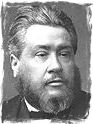
Charles Spurgeon

Charles Haddon Spurgeon: English Baptist

Charles SpurgeonCharles Haddon Spurgeon: English Baptist; born at Kelvedon (40 miles northeast of London), Essex, [England], June 19, 1834; died at Mentone (13 miles northeast of Nice), France, January 31, 1892. His father and grandfather had been Independent ministers. From the age of seven to fifteen he was educated in a school at Colchester; he spent a few months in an agricultural college at Maidstone in 1842; and in 1849 became usher in a school at Newmarket, kept by a Baptist. As a youth he was subject to inner restlessness and conflict and dated his conversion from December 6, 1850, at the chapel of the Primitive Methodists in Colchester, on which occasion he was deeply stirred and greatly relieved by a sermon preached by a layman on Isaiah 45:22. However, the study of the Scriptures brought further misgivings and he was not content until he was immersed. This took place in the Lark at Isleham May 3, 1851, and he then united with the Baptist communion.

In 1851 he became usher in a school at Cambridge, and entered the lay preachers’ association in connection with the Baptist church meeting in St. Andrews Street, Cambridge. Forced by circumstance he preached unprepared his first sermon in a cottage at Teversham near Cambridge, at the age of sixteen. His gifts were recognized at once and his fame spread. He preached in chapels, cottages, or in the open air in as many as thirteen stations in the villages surrounding Cambridge, and this after his school duties for the day were past. In 1852 he became pastor of the small Baptist church at Waterbeach, and in 1854, after preaching, three months on probation, he was called to the pastorate of the New Park Street Church, Southwark, London. Only 100 persons attended his first service; but before the end of the year the chapel had to be enlarged, and he preached in Exeter Hall during the alterations. When the enlarged chapel was opened it proved at once too small, and a great tabernacle was projected. Meanwhile, in 1856, Spurgeon preached at the Surrey Gardens music-hall to congregations which numbered 10,000 people; and at twenty-two he was the most popular preacher of his day. In 1861 the Metropolitan Temple [Tabernacle], seating 6,000, was opened and there he ministered until his death, retaining his popularity and power as a preacher to the end.

Beside preaching, other enterprises made their demand upon his energy. In 1855 he accepted his first student for the ministry; soon a class assembled in his house every week for instruction in theology, pastoral duties, and other practical matters. This work was assigned mainly to a tutor. Out of it grew the Pastors’ College, located first in his house; under the Tabernacle, 1861-74; and, after 1874, in the New College buildings. The local mission work of these students in the slums formed the nuclei of new Sunday-schools and churches, a circle of which banded around the central church. Its internal needs were provided by a number of auxiliary associations. Spurgeon was president of a society for the dissemination of Bibles and tracts employing the service of ninety colporteurs. The Stockwell Orphanage was incorporated in 1867 with an endowment of £20,000 given by Mrs. Hillyard. It grew to a group of twelve houses and accommodated 500 children.

The figure of Spurgeon was a composite one. Methodist by conversion, Baptist by profession, he was fundamentally Calvinistic by descent and is sometimes called “the last of the Puritans.” He was minded to carry his obduracy even to the extent of disunion among the churches. In 1864 he invited a controversy with the Evangelical party in the Church of England by a powerful sermon, Baptismal Regeneration, a doctrine which he opposed; 300,000 copies were sold, and numerous pamphlets written in reply, the most important was by a Baptist, B. W. Noel, Evangelical Clergy Defended (1864), in which Spurgeon was censured for introducing needless divisions among men of like faith. He, however, ended by withdrawing from the Evangelical Alliance. He also watched with misgivings the growth among Baptists of what seemed to him indifference to orthodoxy, deploring that not enough stress was laid on Christ’s divine nature. He opposed what he called the “down-grade” movement of Biblical criticism; and, not being able to win the Baptist Union to his view, he withdrew in 1887, remaining independent until the end of his life, although still a stanch Baptist.

Personally unambitious and unselfish, industrious in his exacting parish service and incessant Biblical study, human in sympathy and sane on social questions, democratic in temperament, he was ever zealous in the gospel of grace and redemption, and fearless in denouncing evil and upholding what he deemed true and right. As a preacher his early success was due to the sensation of his youth, his spontaneous humor, the fervor of his appeals to the conscience, but mostly to his natural gift of oratory. With a clear sympathetic voice and easy gesture, he knew how most effectively to present his appeal for salvation, projected from a shrewd comment on contemporary life and sustained upon his characteristic expository treatment of Scripture derived from the old Puritan divines. He was in later life a great sufferer from gout, and frequently was obliged to leave his pulpit.

The results of Spurgeon’s literary labors had an enormous circulation. He conducted The Sword and the Trowel, a monthly church magazine; and published more than 1,900 sermons, including, from 1855, a sermon every week, contained in The Metropolitan Tabernacle Pulpit, continued after his death (49 vols., London, 1856-1904). Other works were, The Saint and his Savior (London, 1857); Morning by Morning; or Daily Readings for the Family or the Closet (1866); Evening by Evening (1868); John Ploughman’s Talk (1869); and John Ploughman’s Pictures (1880). Famous also is Our Own Hymn Book, with paraphrases of Psalms (1866). His most important work was The Treasury of David, an exposition of the book of Psalms (7 vols., 1870-1885). In view of his own lack of higher training, he was dependent in Biblical work upon the research of his assistants for scientifical material and on the Puritan divines for method and point of view; and his commentaries are practical and homiletical rather than scientific. Shortly before his death he completed The Gospel of the Kingdom, a popular exposition of Matthew (1893).

Bibliography. Besides Spurgeon’s Autobiography, Compiled from his Diary, Letters, Records, by his Wife and his Secretary, 4 vols., London, 1897-1900, there are biographies by: G. H. Pike, new ed., London, 1887, R. H. Conwell, Philadelphia, 1892; J. D. Fulton, Chicago, 1892; G. C. Lorimer, Boston, 1892; R. Shindler, From the Usher’s Desk to the Tabernacle Pulpit, New York, 1892; H. L. Wayland, Philadelphia, 1892; J. J. Ellis, new ed., London, 1902; C. Ray, ib. 1903, cf. the same author’s A Marvelous Ministry, ib. 1905. Consult further J. Fernandez, Nonconformity in Southwark, London, 1882; W. Williams, Personal Reminiscences of Charles Haddon Spurgeon, New York, 1895; W. M. Higgs, The Spurgeon Family, London, 1906.

From The New Schaff-Herzog Encyclopedia of Religious Knowledge… New York: Funk and Wagnalls Company, 1911.

John Newton

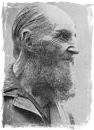
John Newton: Hymn Writer and Preacher

John NewtonJohn Newton who was born in London, [England], July 24, 1725, and died there Dec. 21, 1807, occupied an unique position among the founders of the Evangelical School, due as much to the romance of his young life and the striking history of his conversion, as to his force of character. His mother a pious Dissenter, stored his childish mind with Scripture, but died when he was seven years old. At the age of eleven, after two years’ schooling, during which he learned the rudiments of Latin, he went to sea with his father. His life at sea teems with wonderful escapes, vivid dreams and sailor recklessness. He grew into an abandoned and godless sailor. The religious fits of his boyhood changed into settled infidelity, through the study of’ Shaftesbury and the instruction of one of his comrades.
Disappointing repeatedly the plans of his father, he was flogged as a deserter from the navy, and for fifteen months lived, half-starved and ill-treated, in abject degradation under a slave-dealer in Africa. The one restraining influence of his life was his faithful love for his future wife, Mary Catlett, formed when he was seventeen, and she only in her fourteenth year. A chance reading of Thomas à Kempis sowed the seed of his conversion; which quickened under the awful contemplations of a night spent in steering a water-logged vessel in the face of apparent death (1748). He was then twenty-three. The six following years, during which he commanded a slave ship, matured his Christian belief. Nine years more, spent chiefly at Liverpool, in intercourse with Whitefield, Wesley, and Nonconformists, in the study of Hebrew and Greek, in exercises of devotion and occasional preaching among the Dissenters, elapsed before his ordination to the curacy of Olney, Bucks (1764). The Olney period was the most fruitful of his life. His zeal in pastoral visiting, preaching and prayer-meetings was unwearied. He formed his lifelong friendship with [William] Cowper, and became the spiritual father of [Thomas] Scott the commentator.

At Olney his best works — Omicron’s Letters (1774); Olney Hymns (1779): Cardiphonia, written from Olney, though published 1781 — were composed. As rector of St. Mary Woolnoth, London, in the center of the Evangelical movement (1780-1807) his zeal was as ardent as before. In 1805, when no longer able to read his text, his reply when pressed to discontinue preaching, was, “What, shall the old African blasphemer stop while he can speak!” The story of his sins and his conversion, published by himself, and the subject of lifelong allusion, was the base of’ his influence; but it would have been little but for the vigour of his mind (shown even in Africa by his reading Euclid drawing its figures on the sand), his warm heart, candour, tolerance, and piety. These qualities gained him the friendship of Hannah More, Cecil, Wilberforce, and others; and his renown as a guide in experimental religion made him the center of a host of inquirers, with whom he maintained patient, loving, and generally judicious correspondence, of which a monument remains in the often beautiful letters of Cardiphonia.

As a hymn-writer, Montgomery says that he was distanced by Cowper. But Lord Selborne’s contrast of the “manliness” of Newton and the “tenderness” of Cowper is far juster. A comparison of the hymns of both in The Book of Praise will show no great inequality between them. Amid much that is bald, tame, and matter-of-fact, his rich acquaintance with Scripture, knowledge of the heart, directness and force, and a certain sailor imagination, tell strongly. The one splendid hymn of praise, “Glorious things of thee are spoken,” in the Olney collection, is his. “One there is above all others” has a depth of realizing love, sustained excellence of expression, and ease of development. “How sweet the name of Jesus sounds” is in Scriptural richness superior, and in structure, cadence, and almost tenderness, equal to Cowper’s “Oh! for a closer walk with God.” The most characteristic hymns are those which depict in the language of intense humiliation his mourning for the abiding sins of his regenerate life, and the sense of the withdrawal of God’s face, coincident with the never-failing conviction of acceptance in The Beloved. The feeling may be seen in the speeches, writings, and diaries of his whole life.

A large number of Newton’s hymns have some personal history connected with them, or were associated with circumstances of importance…

From A Dictionary of Hymnology… edited by John Julian. New York: Charles Scribner’s Sons, 1892.

CT Studd

Charles Thomas (C.T.) Studd

by Stephen Ross

Forward Ever, Backward Never!
“Some wish to live within the sound of Church or Chapel bell;
I want to run a Rescue Shop within a yard of hell.”—C. T. Studd

C. T. StuddCharles T. Studd was a servant of Christ who faithfully served His Saviour in China, India, and Africa. As Alfred Buxton in the forward to the book intitled C.T. Studd: Cricketer & Pioneer by Norman Grubb states:

“C. T.’s life stands as some rugged Gibraltar—a sign to all succeeding generations that it is worth while to lose all this world can offer and stake everything on the world to come. His life will be an eternal rebuke to easygoing Christianity. He has demonstrated what it means to follow Christ without counting the cost and without looking back.

C. T. was essentially a cavalry leader, and in that capacity he led several splendid charges. Three in particular stand out: when C. T. and Stanley Smith led forth the Cambridge Seven to China, in 1885; ten years later when C. T. toured the American Universities at the start of the Student Volunteers; and when in 1910 he initiated the campaign for the region between the Nile and Lake Chad (the largest unevangelized region in Africa at the time)…”

As a soldier of the Cross, C. T. is remembered for “his courage in any emergency, his determination never to sound the retreat, his conviction that he was in God’s will, his faith that God would see him through, his contempt of the arm of the flesh, and his willingness to risk all for Christ.”

Charles Thomas Studd was born in England in 1860, one of three sons of a wealthy retired planter, Edward Studd, who had made a fortune in India and had come back to England to spend it. After being converted to Christ during a Moody-Sankey campaign in England in 1877, Edward Studd became deeply concerned about the spiritual welfare of his three sons and influenced them for the cause of Christ before his death two years later.

By the time C. T. was sixteen he had become an expert cricket player and at nineteen was captain of his team at Eton College. He was further educated at Trinity College, Cambridge where he was also recognized as an outstanding cricketer.

C. T. was saved in 1878 at the age of 18 when a visiting preacher at their home caught C. T. on his way to play cricket. “Are you a Christian?” he asked. C. T’s answer not being convincing enough, the guest pressed the point and C. T. tells what happens as he acknowledges God’s gift of eternal life received through faith in Christ: “I got down on my knees and I did say ‘thank you’ to God. And right then and there joy and peace came into my soul. I knew then what it was to be ‘born again,’ and the Bible which had been so dry to me before, became everything.” His two brothers were also saved that same day!

But there followed a period of six years in a backslidden state. C. T. relates: “Instead of going and telling others of the love of Christ, I was selfish and kept the knowledge to myself. The result was that gradually my love began to grow cold, and the love of the world began to come in. I spent six years in that unhappy backslidden state.” The Lord in His goodness worked in his life and after a serious illness of his brother and his going to hear D. L. Moody the Lord met C. T. again and restored to him the joy of His salvation.

“Still further, and what was better than all, He set me to work for Him, and I began to try and persuade my friends to read the Gospel, and to speak to them individually about their souls.”

“I cannot tell you what joy it gave me to bring the first soul to the Lord Jesus Christ. I have tasted almost all the pleasures that this world can give … but those pleasures were as nothing compared to the joy that the saving of that one soul gave me.”

The Lord continued to work in his life, and led C. T. to go to China. C. T. seeking to comfort his mother wrote: “Mother dear, I do pray God to show you that it is such a privilege to give up a child to be used of God to saving poor sinners who have never even heard of the name of Jesus.” C. T. was one of the “Cambridge Seven” who offered themselves to Hudson Taylor for missionary service in the China Inland Mission and in February, 1885, sailed for China. Once there, they followed the early practice of the Mission by living and dressing in Chinese fashion. He and the others began at once to learn the language and to further identify themselves with the nationals by wearing Chinese clothing and eating with them.

It was while in China that C. T. reached the age (25 years old) in which according to his father’s will he was to inherit a large sum of money. Through reading God’s Word and much prayer, C. T. felt led to give his entire fortune to Christ! “This was not a fool’s plunge on his part. It was his public testimony before God and man that he believed God’s Word to be the surest thing on earth, and that the hundred fold interest which God has promised in this life, not to speak of the next, is an actual reality for those who believe it and act on it.”

Before knowing the exact amount of his inheritance, C.T. sent £5000 to Mr. Moody, another £5000 to George Müller (£4000 to be used on missionary work and £1000 among the orphans); as well as £15,000 pounds to support other worthy ministries. In a few months, he was able to discover the exact amount of his inheritance and he gave some additional thousands away, leaving about £3400 pounds in his possession.

Three years after arriving in China, C. T. married a young Irish missionary from Ulster named Priscilla Livingstone Stewart. Just before the wedding he presented his bride with the remaining money from his inheritance. She, not to be outdone, said, “Charlie, what did the Lord tell the rich young man to do?” “Sell all.” “Well then, we will start clear with the Lord at our wedding.” And they proceeded to give the rest of the money away for the Lord’s work.

They served the Lord together in inland China through many perils and hardships until in 1894 after ten years in China, ill health forced the Studds to return to England, where they turned their property over to the China Inland Mission.

From 1896-1897, C. T. toured American universities in behalf of the newly formed Student Volunteer Movement. C. T. describes one of the meetings at Bucknell College in Pennsylvania:

“Had a splendid student’s meeting at 6:30. The Lord was greatly with us. After some hymns and a prayer, I spoke for about 30 minutes; then all got on knees, and one after another gave themselves to God in such sentences as ‘Lord, take me as I am,’ ‘I will go with Thee, Lord Jesus.’ There must have been a score of them. Oh, surely that is the sweetest music that can ever be heard by any ears, and if sweet to us, how much sweeter to Jesus. Afterwards I got them to sing a hymn:

“The cleansing blood I see, I see,
I plunge, and oh, it cleanseth me.”

In 1900 the Studd family went to South India where C. T. served as a pastor of a church in Ootacamund for six years. From the time of his conversion, C. T. had felt the responsibility upon their family to take the Gospel to India.

China, then India, and now the heart of Africa. After their return home to England in 1906, C. T. was stirred by the need for missionary pioneer work in Central Africa. But again the path was not without obstacles. Penniless, turned down by the doctor, dropped by a Committee of businessmen who had agreed to support him, yet told by God to go, once more C. T. staked all on obedience to God. As a young man he staked his career, in China he staked his fortune, now he staked his life. His answer to the Committee was; “Gentlemen, God has called me to go, and I will go. I will blaze the trail, though my grave may only become a stepping stone that younger men may follow.” Leaving his wife and four daughters in England, C. T. sailed, contrary to medical advice, for the heart of Africa in 1910, where he continued to work until his death in 1931.

C. T. bore much fruit for the Saviour while in Africa as he endured weakness and sickness; loosing most of his teeth and suffering several heart attacks; but he endured hardness as a good soldier of the Lord Jesus Christ!

In a letter home, C. T. gave a last backward look at the outstanding events of his life:

“As I believe I am now nearing my departure from this world, I have but a few things to rejoice in; they are these:

1. That God called me to China and I went in spite of utmost opposition from all my loved ones.

2. That I joyfully acted as Christ told that rich young man to act.

3. That I deliberately at the call of God, when alone on the Bibby liner in 1910, gave up my life for this work, which was to be henceforth not for the Sudan only, but for the whole unevangelized World.

My only joys therefore are that when God has given me a work to do, I have not refused it.”

Shortly after 10:30 p.m. on a July day in 1931, C. T. Studd went home to be with his Lord whom he had loved so dearly and served so faithfully! The last word he spoke was “Hallelujah”!

All quotes from C. T. Studd: Cricketer & Pioneer by Norman P. Grubb